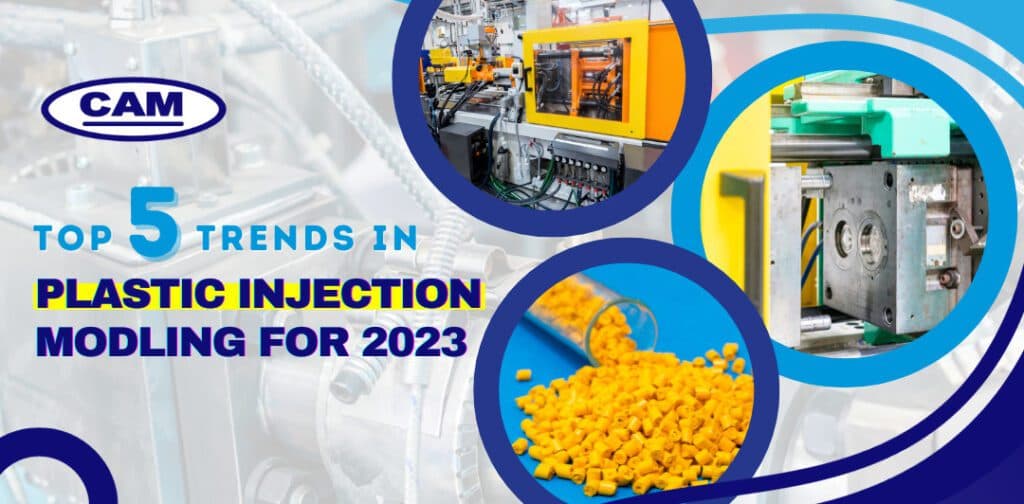
Plastic injection molding is evolving rapidly to meet the demands of modern manufacturing — driven by technology, sustainability targets and shifting industry needs. Below are five trends defining the conversation in 2023.
Why injection molding still wins
The process injects molten plastic into a mold cavity, then cools and solidifies. The reasons it remains the default for plastic mass production:
- Cost-effective high volume manufacturing with minimal per-unit cost
- Versatility for complex geometries across product sizes
- Material options across thermoplastics and thermosetting polymers
- Quality consistency through computer-controlled precision
- Rapid production — parts in seconds or minutes
- Waste reduction — excess plastic is recyclable and reusable
Trend 1 — Intelligent manufacturing
3D printing and simulation software let teams iterate faster than ever — shorter lead times, cheaper setup, and the flexibility to make design changes mid-program.
Trend 2 — Greater automation
Robotics, IoT and AI are giving manufacturers remote production monitoring and predictive maintenance. Collaborative robots are taking over repetitive or hazardous tasks, freeing skilled operators for higher-value work.
Trend 3 — Circular economy & sustainability
Recyclability and waste reduction are now design requirements. Weight-control software and product redesign are helping manufacturers cut material use without sacrificing performance.
Trend 4 — Varying industry demands
Growth is concentrated in three sectors: packaging (driven by e-commerce), medical devices (cleanroom requirements), and automotive (lightweighting and integrated functionality).
Trend 5 — Material durability and innovation
Lightweight materials, bioplastics and engineered plastics that withstand extreme conditions are reshaping what's possible — and what's expected.