
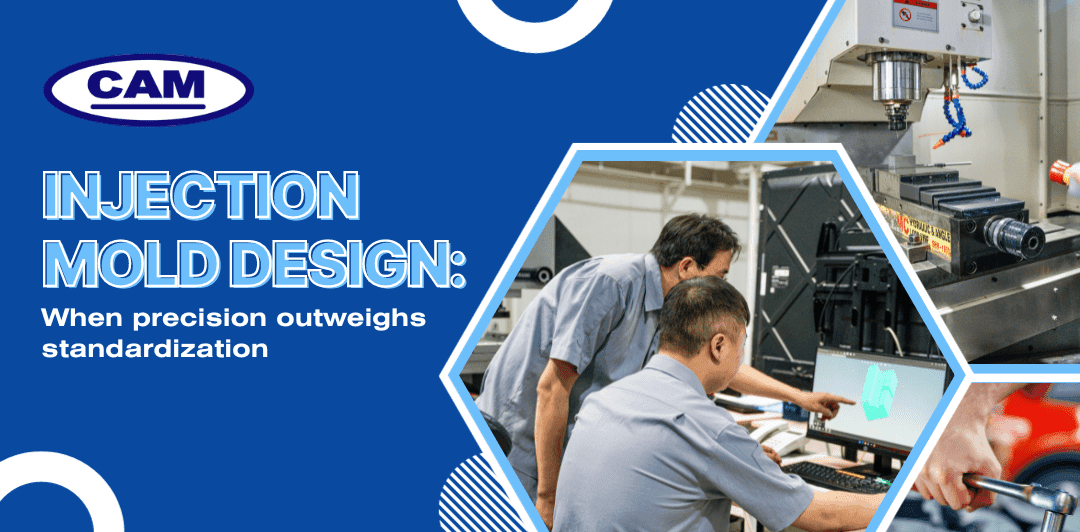
Injection mold design is a balancing act between standardisation and precision. Both have a place — the trick is knowing which to lean on for any given project, and how to combine them.
Understanding injection mold design
Mold design starts with creating a detailed layout for a mold built for plastic injection molding. Designers use CAD software to visualise the design before fabrication, considering material flow, cooling channels, ejection paths and parting lines.
The case for standardisation
Standardised components reduce costs, improve interchangeability and accelerate production cycles. The benefits are tangible: faster production cycles, reduced lead times and easier maintenance — particularly attractive for high-volume runs.
When precision takes priority
There are three scenarios where precision and customisation win out:
- Unique geometries — complex shapes with tight tolerances need custom-designed components that standard molds can't accommodate
- High-performance products — advanced medical devices and aerospace components leave no margin for error
- Specialised materials — high-temperature or chemical-resistant applications benefit from custom components in graphite or titanium carbide
Striking the balance
Smart programs combine both approaches. Three strategies we recommend:
- Modular mold designs that combine standardised and custom elements
- Advanced simulation software to optimise the design before cutting metal
- Well-defined manufacturing protocols that ensure consistency across runs