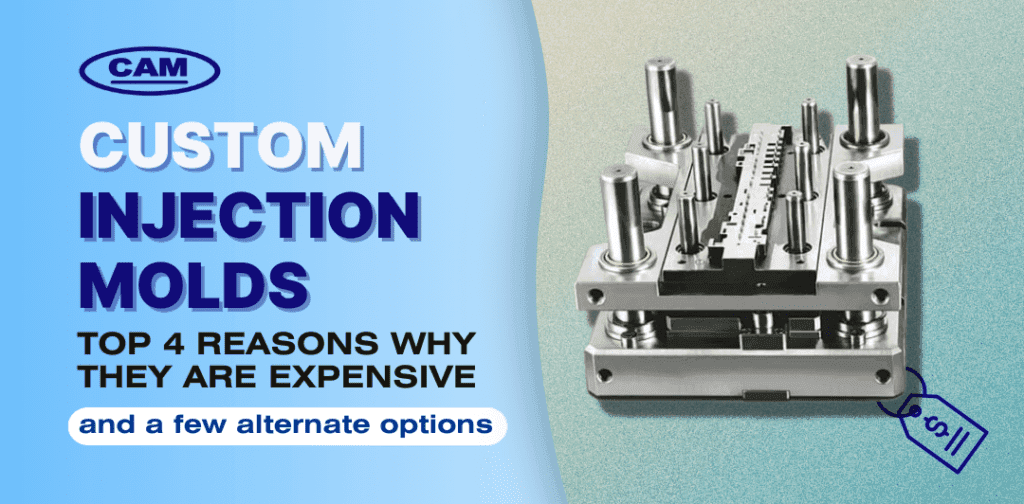
Custom injection molds are a significant investment. A single mold can range from a hundred dollars to six figures. Understanding the cost drivers helps you decide where to invest, where to compromise, and when to look at alternatives.
1. Precision engineering expertise
Precision tooling and injection mold manufacturing are extremely niche industries. The technicians who do this well are rare and expensive to source — and that talent premium ends up in the price of every mold they touch.
2. Advanced machining technologies
Sophisticated equipment is a non-negotiable: CNC machining, CAD/CAM software, EDM and high-precision grinding all push capital costs up. The accuracy these tools deliver is what justifies the investment.
3. Material selection and durability
Molds endure intense pressures and high temperatures across hundreds of thousands of cycles. That demands hardened steel and other expensive, durable materials — there are no shortcuts on tool life.
4. Prototyping and rigorous testing
Before production, molds undergo extensive QC. Achieving tight tolerances down to +/-0.001 takes meticulous inspection with advanced metrology tools — and that inspection time is real cost.
Cost-effective alternatives
Custom injection molds aren't always the right answer. Depending on volume and geometry, these alternatives may save money:
- 3D printing — fast for prototyping, but slower for complex parts at scale
- Soft tooling — budget-friendly for short runs, but less durable
- Metal stamping — efficient for high-volume production of simpler designs
- Die casting — strong dimensional accuracy for large-scale projects